

As a product development scientist, my job is not only to formulate effective and safe products, but also to consider the packaging material that the product will be delivered in.
This is because the choice of packaging material can inform the formulation process and ultimately affect the success of the product in the market.
Packaging plays a critical role in the stability and shelf life of a product, as well as in ensuring its efficacy and safety. The packaging material can also affect the product’s flavor, texture, and appearance, and it can even impact the consumer’s experience and perception of the product.
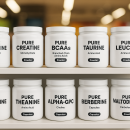
Of course, the packaging contributes significantly to the appearance of the product when standing on the shelves
In recent years, there has been a growing interest in innovative and sustainable packaging materials, particularly in the supplement and functional food industries.
One such innovation is the development of edible dissolvable pods, which have the potential to revolutionize the way we consume supplements and functional foods.
Dissolvable pods
Dissolvable pods are, as the name implies, powder-filled packets that are designed to dissolve in water. They are made using a proprietary technology that compresses powdered supplements into a small, dissolvable pod that can be added to water or other liquids.
The dissolvable pods are marketed as a convenient, mess-free and portable alternative to traditional supplements, with the added benefit of reducing packaging waste.
There are a number of brands that offer their products in this format. By all accounts, Vade Nutrition was one of the earliest adopters of this idea, offered their protein powders and pre-workouts in this format.

Vade Nutrition, one of the earliest adopters of edible pods. Source: Vade Nutrition website. Disclosure: No affiliation with brand.
What are the pods made of?
The pods are made of several material. Most commonly the material is polyvinyl alcohol, which is synthetically made polymer. This material hasn’t received any objection from the FDA regarding its status as a GRAS (Generally Recognized as Safe).
Edible supplement pods are also made with modified plant-based materials like Hydroxypropyl methylcellulose, which is a non-toxic, non-ionic, and water-soluble cellulose derivative commonly used as a food additive and in the pharmaceutical industry. It is a type of plant-based polymer made from cellulose that has been chemically modified with hydroxypropyl methyl groups.
Why are we not seeing more edible supplement pods on the market?
While edible supplement pods have gained popularity in recent years, there are several reasons why they may not be as prevalent on the market compared to powders in jars and sachets/ stickpacks.
Manufacturing complexity: Edible pods require specialised equipment and technology for production, which may be cost-prohibitive for some manufacturers. Not many contract manufacturers may have the equipment to pack the edible pods which imposes a severe limitation to brands willing to offer this format.
Incompatibility with certain product formats: One of the potential limitations of using edible pods for supplements or medications is that they may not be the best fit for all types of formulations, such as liquids or gels. This can limit the range of products that brands can offer in pod format. One of the main narratives that brands that offer edible pods is that of sustainability. Honouring this commitment would require that brands offer their entire range in sustainable packaging, which is not possible at present for liquid formulations.
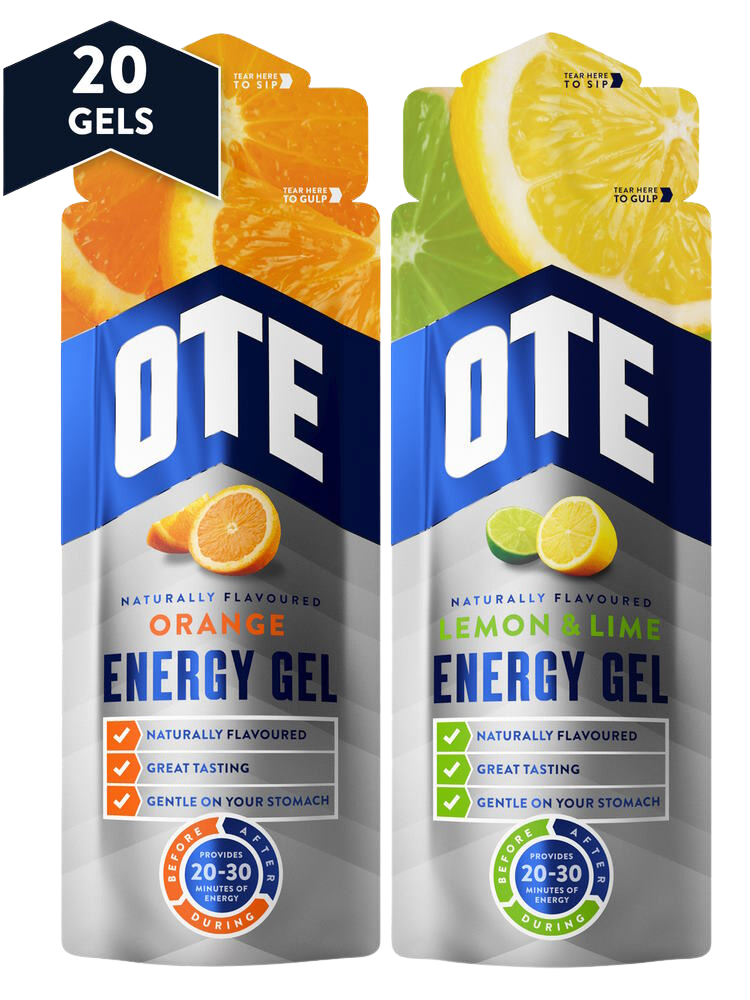
Liquid or gel supplements are not compatible with edible pods. Image source: OTE Nutrition website. Disclosure: No affiliation with brand.
Reactions between ingredients and packaging: Acidic ingredients like citric acid can potentially interact with the material used to make edible pods. This is because some edible pod materials, such as HPMC (hydroxypropyl methylcellulose), can be sensitive to changes in pH and may dissolve more quickly or slowly depending on the acidity of the environment. Formulations may need to be adjusted, like a reduction of acidifying agents, but this can have an impact on the taste of the products as citric acid is a powerful flavour enhancer. The pH sensitivity of the edible pods also restrict the use of important acidic functional ingredients like Acetyl-L-Carnitine and Betaine hydrochloride in formulations.
Limited branding ability: Limited ability to brand the pods can also be a factor in why some brands may not offer their entire range in edible pods. Edible pods typically have a small surface area, which can make it challenging to include extensive branding or product information on the packaging. This can be especially challenging for brands that rely on packaging design and branding to distinguish their products from competitors. Also, brands may need to find a way to differentiate products so that customers can remember which products are in the pods if they use the pods on-the-go.
Also, pod format may limit the ability to give away product samples due to lack of branding.

Sachets or stickpacks offer more branding real estate which are important for supplement marketing. Source: Amazon.com. Disclosure: No affiliation with brand.
What if one needs one and a half serving?: If one needs one and a half serving of a supplement or medication that comes in edible pods, it can be challenging to divide the pods accurately. Edible pods are typically designed to deliver a specific amount of the supplement or medication, and it may not be possible to cut or split the pods to obtain a precise dose.
Conclusion
In conclusion, while there are challenges associated with the development and marketing of edible supplement pods, the potential benefits, such as sustainability and convenience, make them an attractive option for both brands and consumers. With continued innovation and development, edible supplement pods are likely to become an increasingly popular format for supplements and medication.

To view my Professional Profile on LinkedIn: please click here
To see my latest product creations: www.bioteenhealth.com
To view my Scientific Publications on PubMed: please click here
To get in touch, please write to: info@supplementscientist.com
Follow supplementscientist.com on Facebook: please click here
Medical disclaimer
The information presented on this website is intended for adults 18 or over. Its aim is purely educational and does not constitute medical advice. Please consult a medical or health professional before you begin any program related to exercise, nutrition, or supplementation especially if you have a medical condition. If you consume any product mentioned on our site, you do so on your own free will, and you knowingly and voluntarily accept the risks. © 2023. Supplementscientist.com



Leave a Reply